Start with the meter: a check you can do yourself
This is the one test worth doing before you call, and it takes almost no skill. It tells you whether water is moving through the meter when nothing in the house should be using any.
- Make sure no one is using water. Close taps, and make sure the dishwasher, washing machine and any ice maker are not running.
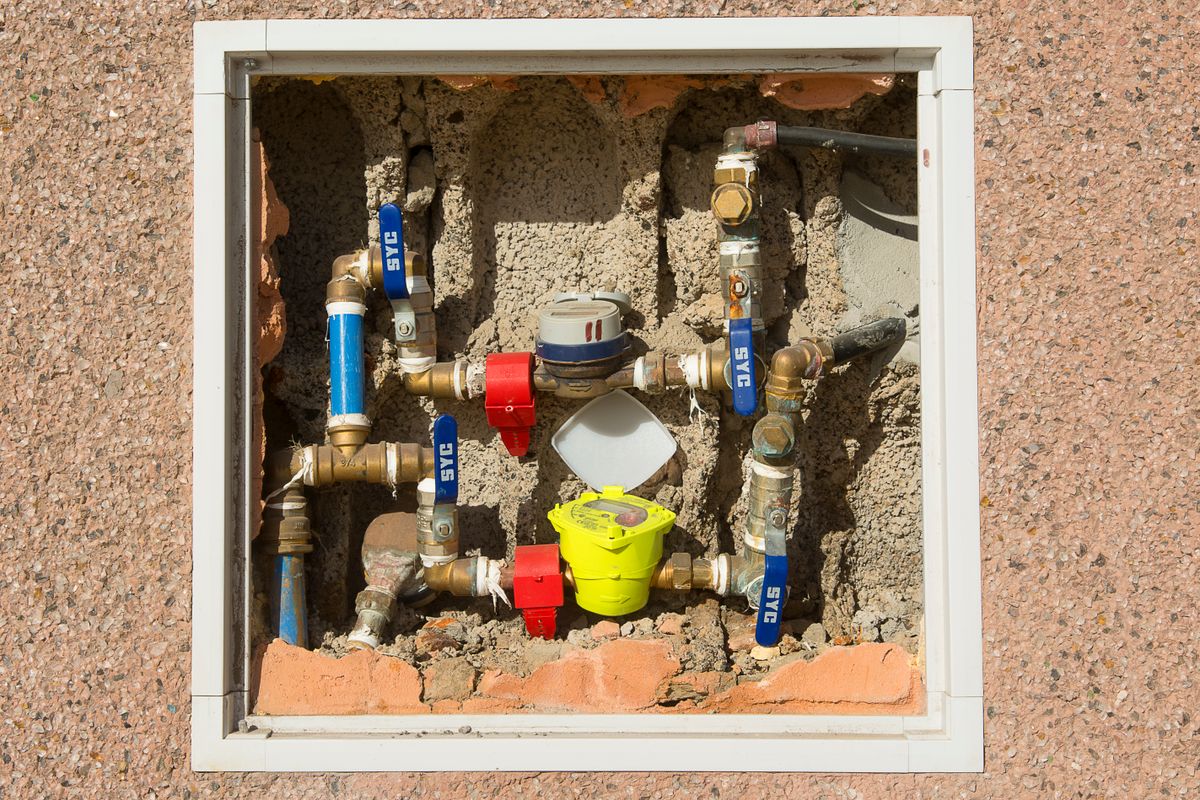
- Find the meter, which is often in a pit near the curb or inside near the entry point of the line. Lift the cover carefully if it has one.
- Look for the leak indicator, a small dial or triangle that spins when any water passes. If it is turning, something is using water.
- If there is no indicator, take a clear photo of the dial reading.
- Wait about thirty minutes with no water use at all.
- Take a second photo. If the numbers have changed, water is escaping somewhere past the meter.
A moving meter with the house quiet does not say where the water goes. It could be the buried line, a dripping fixture or a running toilet. The test narrows the question; it does not answer it. Do not dig or pry at the pit or the pipes to find out more.
Pass your results along when you call. A reading and a photo help the technician arrive prepared.
What the yard might be telling you
Water under pressure goes where the ground lets it. Sometimes it rises to the surface and sometimes it disappears into soil or gravel.
Outdoor clues tend to look like these:
- a stripe of grass that stays lush and green while the rest browns in dry weather
- a soggy, soft or sunken area between the street and the house
- water pooling at the curb box or around the meter pit
- a mossy or muddy patch where it has not rained
- a faint hiss or rushing sound near the foundation where the line comes in
Remember that the wet spot is where the water surfaces, not necessarily where the pipe is broken. A leak can travel along the outside of the pipe, through a layer of stone or beside a footing before it appears. That gap between cause and symptom is why guessing and digging goes wrong.
Seen something odd in the yard? Describe it by phone and a dispatcher can line up a visit to find out.
Call for emergency dispatchHow the pros narrow it down
No single gadget does everything. Most crews pick from a general toolkit and match it to your pipe and your soil.
Listening
Escaping water makes a sound as it leaves a pipe. Sensitive microphones and ground sensors can pick up that noise at the pipe or the surface. Plastic pipe carries sound poorly, so this works better on some materials than others. Traffic and plumbing noise can also muddy results.
Tracing the route
You cannot find a leak on a line you cannot locate. Electronic tracing can follow metal pipe, and other methods help with plastic. Knowing where the pipe really runs matters, because it rarely follows the straight line you imagine.
Pressure testing
The line is isolated and pressurised, and the technician watches whether it holds. A fall in pressure confirms a leak and can help show whether it lies in the buried run or elsewhere. It is less about location than about certainty, and it often goes hand in hand with the other methods.
None of these is magic, and results improve when the tools are combined. If you want to understand how the finding fits into a larger fix, our page on main water line repair picks up from there.
Is it the buried line or something inside the house?
Often the first job is to rule things out. A running toilet, a leaking supply connection, a dripping faucet or a failing valve can all turn the meter, and none of them involve the underground line.
A technician can separate the two by isolating the house at the main shut-off and seeing whether the meter still moves. If the meter stops once the house is cut off, the problem is inside. If it keeps going, the leak sits between the shut-off and the meter, which is the buried stretch.
This is useful to know, because it keeps you from paying to dig for a leak that is under a sink. And if the issue turns out to be an inside fixture, the technician will tell you honestly so, rather than starting a job that does not match.
Once the leak is found
Locating is not repairing, but it changes the next conversation. Instead of "something is wrong", you have "this stretch, this likely cause".
From there it comes down to the condition of the pipe. A sound line with a local failure points to a spot fix. A tired, corroded line, especially of the older galvanized sort covered in our guide to old and lead-era service lines, may point toward replacement. Pressure that has fallen across the whole house is a separate symptom worth reading about under low pressure from the main line.
If water is clearly escaping, closing the main shut-off is reasonable. Otherwise, avoid running anything you do not need.
Where leaks tend to hide around Dover
Different parts of town hide leaks in different ways.
In the older borough streets, the line is often short, and a leak near the foundation can seep into a basement wall or floor before the lawn shows anything. Basements are common here, and a damp corner can be the only sign.
In Weigelstown and along the Carlisle Road corridor, mid-century and later homes may have lines laid across driveways or beneath established landscaping, so a leak can stay out of sight.
In western Dover Township, the lines to bigger lots run farther. A slow leak over a long run can soak the ground quietly. If you live near Davidsburg, pay attention to unusually green or soft patches along the path from road to house. Homes on private wells are not served by this service.
Across Dover Township generally, cold winters add stress. Frost heaves and thaws can open a joint that was already weak, and a leak may only show itself in spring once the ground softens.
Meter moving and no explanation? Call for a local leak-locating visit before you hire anyone to dig.
Get a technician heading your way