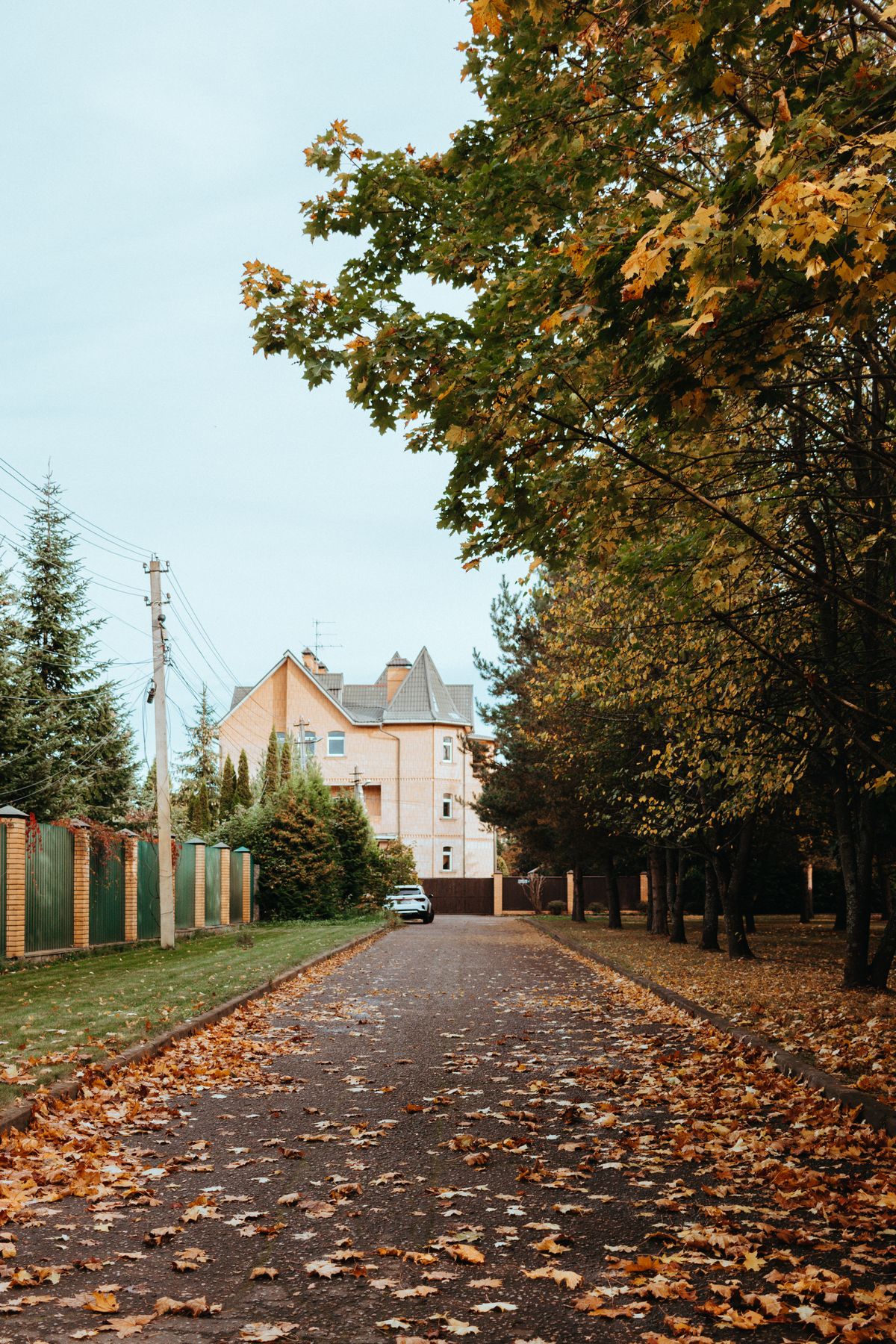
Why distance changes everything out here
In western Dover Township, a service line is rarely the short hop you find in town. A house set back on a generous lot can have a buried line stretching the length of a front yard, and every foot of it is a place for a joint to loosen. A leak can sit unseen under grass for a long time. The first clue is often just a water bill that makes no sense.
This page covers Davidsburg and the lots around it, including the Rohlers Church Road area. It is written for homes that take water from a public main in the street. A house on a private well is outside this service.
Who this service is for, and who it is not
Davidsburg is a mix, and the mix matters. Some streets have a public water main, and those homes have a service line from the connection near the road to the house. Larger rural lots often draw from a private well and never had a buried line from the street.
- Public water: a meter, in a pit near the road or inside the basement, and a bill from your water provider. This is who we help.
- Private well: a pressure tank and no water bill. Well pumps, tanks and well lines are outside what we connect you with.
- Not sure: look for a meter and a bill. If you find neither, you are probably on a well, and your water provider can confirm.
On public water, responsibility usually starts at the meter, curb stop or property line and runs to the house, but it varies. Check with your water provider.
The houses and the ground they sit on
Most homes here are newer than the ones near the borough. Many went up in later subdivisions or on individual lots, and plenty were plumbed in plastic rather than the galvanized steel found in older housing. Plastic does not rust from the inside, so the slow choking of an old iron pipe is less common.
Newer does not mean problem-proof. Expect long runs, basements set well back from the road, and lots with real slope in places. Larger yards also bring mature trees, drainage swales and long driveways, all of which shape where a technician can dig and where trenchless starts to make sense.
Where long lines tend to fail
With newer plastic, the pipe itself is rarely the weak point. Trouble shows up where pieces meet or where something outside has pushed on it.
- Joints and fittings: a coupling can weep slowly, then let go, and a long run simply has more of them.
- Damage from digging: a fence post, drainage job or landscaping can nick a line that fails months later.
- Rock and settling: fill that later settled, or stone against the pipe, stresses one spot.
- The entry point: movement between foundation and soil can strain the pipe where it passes into the house.
Pressure is the other complaint. At the end of a long run even a healthy line loses some force, so a house far from the street can feel weak at the tap when nothing is broken. Sorting that from a real restriction is covered on the low pressure page.
If your water bill jumped or the yard feels soft along the line, talk it through with someone who handles long runs.
Talk to a main water line pro nowWhat the technician looks at before touching a shovel
First job: figure out where the line actually goes. Long runs are not always laid straight, and nobody wants to dig along a guess.
- Confirm you are on public water and find the meter and main shut-off.
- Run the meter check with everything off to see whether water moves when it should not.
- Walk the likely route for soft ground, greener grass or sunken patches, especially at low points.
- Compare pressure near the entry point with a tap at the far end of the house.
- Decide whether locating, repairing a section or replacing the run fits that lot.
Locating the failure precisely saves digging. The leak detection approach uses sound, tracing and pressure checks so a repair opens at the right spot instead of along the whole yard.
Repair, replace, or go under the lawn
One clean failure on an otherwise sound line is a different conversation than a line with several weak points. The technician lays out the options and explains pricing before any work begins.
On big lots, restoration is a real question. Where trees, a driveway or a hillside are in the way, a trenchless method may be possible, though not on every lot, and the technician will say so if the ground rules it out. The full picture is on the main water line replacement page.
A call, start to finish
You describe what you have seen: a wet patch, a spinning meter, weak pressure upstairs. Someone answers at any hour and asks a few plain questions, including whether you are on public water and where the line enters. We connect you with a local technician and dispatch one, same day where available.
On site, the technician checks the meter and the likely route and talks through what they find. You hear options and price before work starts, with no hidden fees. Every technician is an independent local professional.
Ready to describe what you are seeing out there?
Get Dover help todayNeighboring areas we also cover
The same crews work the rest of Dover Township, and the Conewago side to the north-east has its own suburban lots and open land. Davidsburg homes sit in ZIP 17315, the same code as the borough.