Replace it or repair it? How to tell which way your line is leaning
Most people start out hoping for a patch. That is a fair instinct, and sometimes it is the right call. A single failed joint on an otherwise sound pipe is a repair job. The trouble starts when the same line keeps producing new problems.
Replacement usually enters the conversation when several of these show up together:
- a second or third leak on the same run of pipe
- pressure that has faded across every faucet, not just one
- water that runs brown or rusty and does not clear after a minute
- a pipe that was visibly crusted or pitted when it was last exposed
- a home old enough that the line is likely the original one
None of that proves anything on its own. The technician we dispatch will look at what the line is made of, where it has failed, and how much of it is in doubt. If a short repair is enough, you will hear that. Our page on main water line repair covers what that path looks like.
Before anyone digs, one quick check is worth doing. With every tap and appliance off, look at your water meter. If the dial or the small leak indicator is still turning, water is escaping somewhere past the meter. Tell the person on the phone what you saw.
Following the pipe: the usual route on a Dover lot
The line starts where the provider's side ends, at the meter or the curb stop, and runs underground to the point where it enters the house. On a lot with a short front yard that can be a modest stretch. On a deeper setback it can cross a lawn, a walkway and sometimes a driveway.
Before a route is chosen, the crew confirms where the old pipe actually sits. Lines do not always run straight, and older ones were sometimes laid around obstacles that are long gone. Marking other buried utilities comes first, which is also why you should never start digging on your own.
Digging a trench or going underneath: how the pro makes the call
There are two broad ways to put in a new line. Open trench means excavating along the whole route. Trenchless means working from a small number of access pits and pulling or pushing the new pipe through the ground. Each has a place.
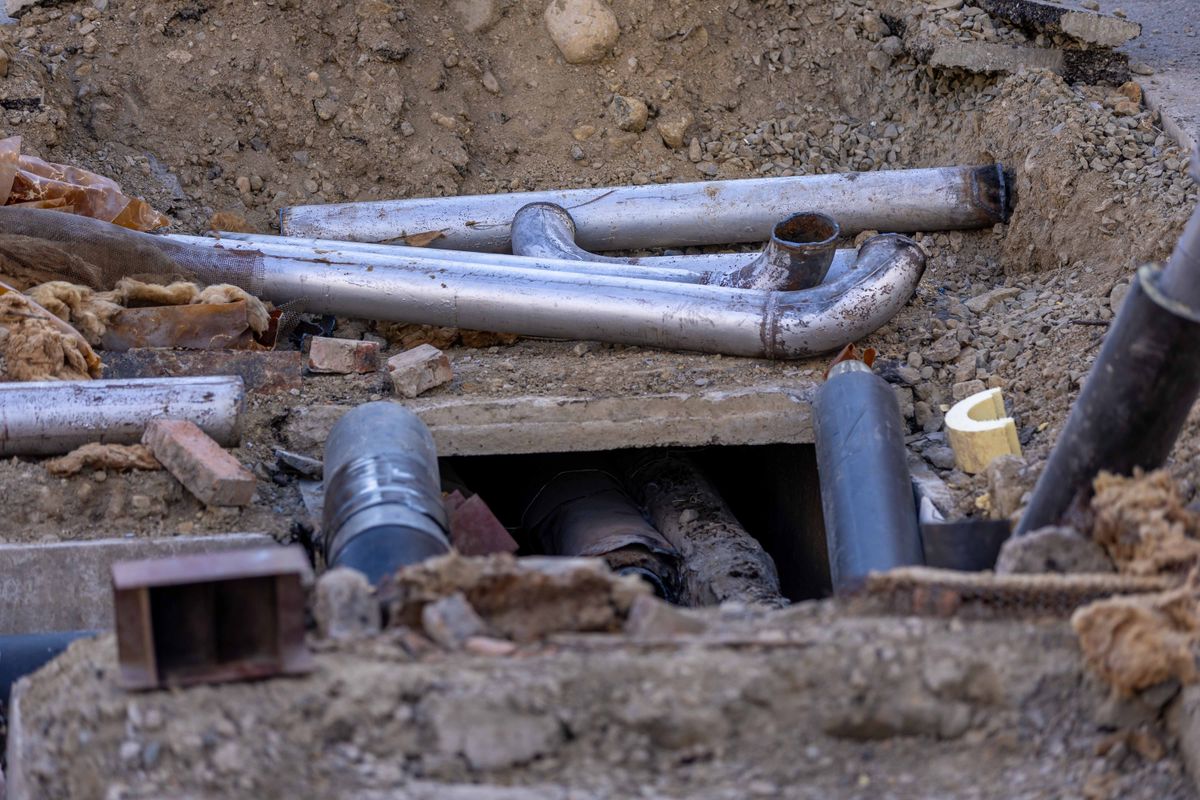
Trench work tends to suit short runs across open lawn, where the cost to the landscape is low and the crew can see exactly what is down there. Trenchless tends to suit routes that cross concrete, mature plantings, retaining walls or steep ground. Soil conditions, buried rock and the condition of the old pipe all affect whether trenchless is workable at all.
We have a separate page on trenchless water line replacement that goes deeper on how it works and where it falls short. The short version: nobody should promise you trenchless before they have looked at the lot.
What the new pipe is made of
Modern residential service lines are typically plastic-family or copper pipe, and some jurisdictions lean one direction or the other. The technician will tell you what they propose and why, and you can ask what the local provider expects at the connection.
From shut-off to backfill: how the job usually runs
Every job is a little different, but the sequence is familiar:
- The water to the house is shut off, at the main valve or at the curb stop where that applies.
- The crew exposes the old line at both ends, by digging a trench or opening access pits.
- The new pipe is put in place, either laid in the trench or drawn through a bore or the old line.
- Connections are made at the meter side and at the house.
- The new line is pressure tested, and the crew checks for leaks at the fittings.
- Water is turned back on, and you are asked to run taps to clear air from the system.
- The excavation is backfilled and compacted, and the surface is tidied.
Lawn, driveway and shrubs: setting expectations
Any underground work disturbs the ground. A trench leaves a visible scar, even when the sod is lifted and put back carefully. Trenchless reduces that, but it does not erase it, because the access pits still need to be opened and closed.
Raised sod settles over time. Topsoil and seed may be your job once the crew leaves, so ask who handles the finish work. If the route crosses a paved driveway or a walk, ask what the plan is for the surface, because that is where surprises tend to happen.
Have a particular tree, walk or driveway you want to protect? Describe the layout on the phone and the dispatcher can pass it along.
Phone a local water line proWhy Dover lines fail at the ages they do
Dover is not one kind of neighborhood, and the age of the house tells you a lot about the age of the line.
In the old borough core around the square and Canal Street, many homes predate modern pipe standards. Services there may be older metal, and the stretch from the curb to a basement wall can be short but cramped. Our page for Dover Borough goes into what that looks like in practice.
Out along Carlisle Road in Weigelstown, much of the housing was built from the 1950s through the 1990s, and some lines from that period are now old enough that corrosion or joint trouble is plausible. West of the borough, in Davidsburg and along Rohlers Church Road, newer subdivisions mix with larger rural lots, where the line can be long. Our Davidsburg page covers longer runs, and a reminder that homes on private wells are not served by this service. North-east in Conewago Township, suburban lots and rural land share the same road.
Then there is the climate. Winters here bring deep frost and repeated thaw cycles, and the ground moves. Buried pipe, especially older and more brittle pipe, takes that strain year after year. It rarely fails on the coldest morning; it fails when the joint or wall has been weakened for a long time.
Ready to talk through your own line? A short call is usually enough to work out the next step.
Start with a quick phone call