When the pipe itself is the problem
Most people land on this page for one of three reasons. The water comes out tinted after the house has been quiet overnight. The shower that used to hit hard now dribbles. Or somebody noticed a dull gray or dark pipe poking through the foundation and started wondering what it is and how long it has been there.
All three point at the same place: the buried service line that carries water from the street to your house. In older construction that line was not always the material we would pick today, and decades underground change what it can do. This page covers how the material gets identified, what age does to it, and what replacing the private side looks like.
Not sure what is running into your house? Describe what you see and we will line up a local technician.
Book your main water line visitReading the pipe where it comes through the wall
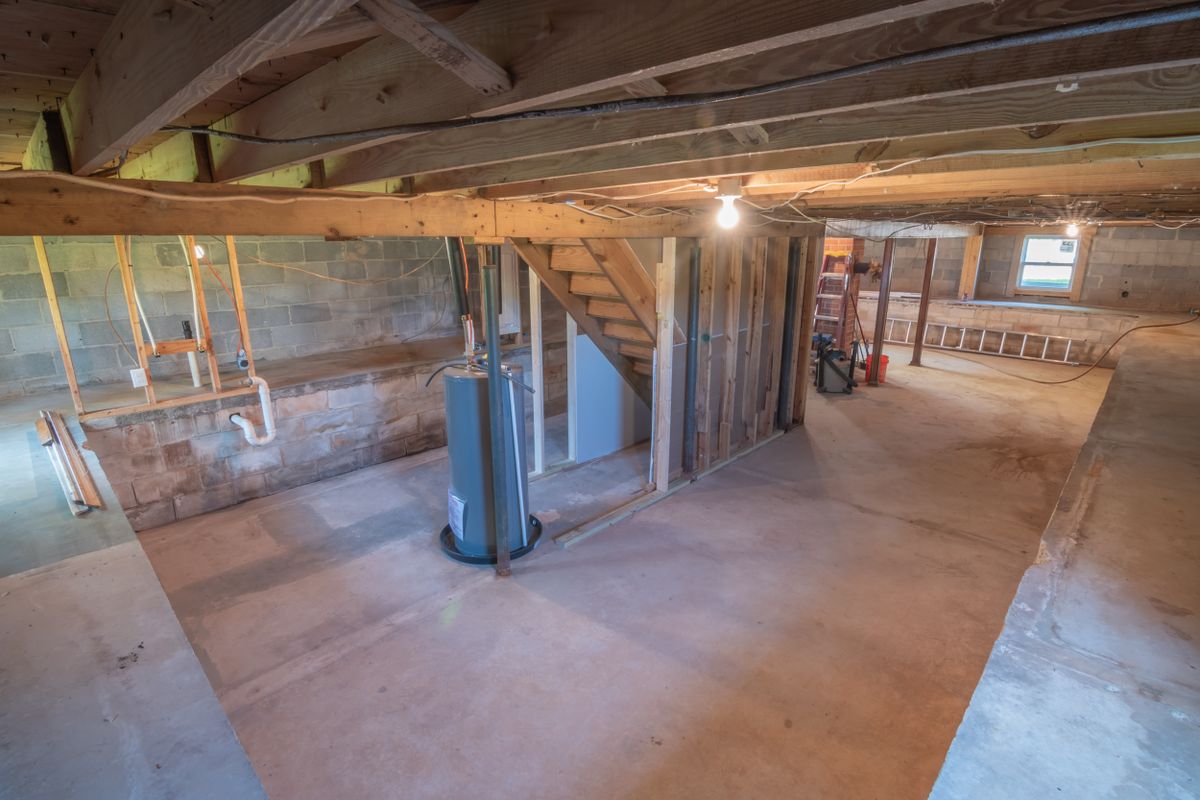
You can learn a surprising amount just by looking at the spot where the line enters the house. In most Dover basements that is a wall near the front of the home, close to the meter. In a slab-on-grade house it may be a utility closet, a garage wall or a crawl space. Look for the first stretch of pipe after the wall and before any fittings or branches.
Homeowners tend to notice a few broad patterns:
- Copper usually looks like a reddish-brown or, when old, dull green-brown tube with soldered fittings.
- Galvanized steel is gray and often looks rough, threaded at the joints, and may show orange rust weeping at the fittings.
- Older soft gray metal that looks dull and bends into curves without sharp angles is a reason to ask a professional to take a closer look.
Looking is as far as a homeowner should go. The technician we dispatch can identify the material properly and tell you whether what you can see is the same all the way out to the street.
What decades of galvanized pipe do to your water
Galvanized steel was a common choice for water lines in many houses built before the middle of the last century. It is steel with a zinc coating, and that coating is what protects it. Over a long stretch of years the coating wears and the steel underneath corrodes. Rust builds up in layers on the inside wall of the pipe, a bit like plaque, and the opening gets narrower.
A narrower opening means less water passes through. The first sign is usually pressure that feels weak when two things run at once, a shower and a dishwasher for example. As the narrowing continues the weakness shows up even with one fixture. If you want the deeper story on that, our page on low pressure from the main line walks through how the pro tests for it.
Why the water turns brown in the morning
Water that sits in a rusty line overnight picks up color from the pipe wall. The first draw of the day pulls that standing water into the house, which is why the tint is strongest before breakfast and clears after the tap runs a while. If it shows up all day instead of clearing, mention that on the phone.
Discolored water is a reason to have the line looked at. It is not something this site can diagnose, and questions about water quality belong with your water provider.
Lead-era lines and what you can actually do about them
Here is the plain version. In the past, some service lines were made of lead. Which houses have one depends on when and how they were built and whether the line was ever replaced. You cannot tell from the street, and you cannot reliably tell from a quick look in the basement. A professional can identify the material by examining the pipe and, where needed, the section outside the house.
That is all we will say about it, because it is all that can honestly be said without knowing your specific house. For water handling or testing, ask your water provider. For the material on your property, we send someone who can find out.
Many communities have provider-run inventories of service line materials, and some have replacement programs. Whether yours does is a question for your provider. Nothing on this site is a promise of any program or funding.
Who is likely responsible for which piece
A service line usually has two halves. The public half runs from the main in the street to a connection point near the property edge, often a curb stop or meter. The private half runs from there into your house. Homeowners are usually responsible for the private half, but the exact dividing line varies, so check with your water provider before assuming.
Why does this matter for an old line? Because replacement is rarely a one-piece decision. The part you own might be replaceable on your schedule, while the public part follows the provider's own plans. We work on the private side only. If the technician finds that the trouble sits beyond the dividing point, they will tell you so and point you to the provider.
That connection point is often a valve. If it is stuck or leaking, the work gets coordinated differently, which our page on curb stop and shut-off valves explains.
Dover homes and the age of the line underneath them
The age of the house is the strongest clue to the age of the pipe, and Dover has plenty of both old and new. Five parts of the area tend to tell different stories.
The borough core
Around the square and Canal Street the brick and frame homes are the oldest in the ZIP code. If the original line was never touched, it may be galvanized steel or something older. Basements are common here, and the entry point is usually easy to find. Our page for Dover Borough goes into more detail on how those lots behave.
Weigelstown and Carlisle Road
Post-war subdivisions along the Carlisle Road corridor often have a mix. Some are original, some were replaced when a leak forced the issue, and some changed hands so often that nobody remembers. For this part of town, the homeowner usually ends up needing the material identified before anything else. See Weigelstown for the local picture.
West, east, and the frost question
Newer subdivisions in western Dover Township and Davidsburg are less likely to have the oldest materials, though pipe type still varies. East toward Conewago Township the homes range widely; read about the Conewago Township side if you live out that way. Across all of it, cold winters and freeze-thaw cycles put stress on buried lines, and an already-worn pipe feels that more than a sound one.
Homes on private wells and septic are not served by this service. It applies to houses on a public water connection.
What replacing the private side involves
Once the material is confirmed and the technician agrees replacement makes sense, the broad outline is simple. Your water gets shut off at the right point, the old line is exposed or pulled out, the new pipe goes in, the connections are made at both ends, the line is tested, and the ground is put back. Whether that happens in an open trench or with minimal digging depends on your yard.
Hardscape, trees and slopes all weigh into the choice, covered on the trenchless replacement page. The technician will lay out options and pricing before any work begins.
Ready to find out what is under your yard? Talk to a local pro about your old line.
Get a straight answer by phone