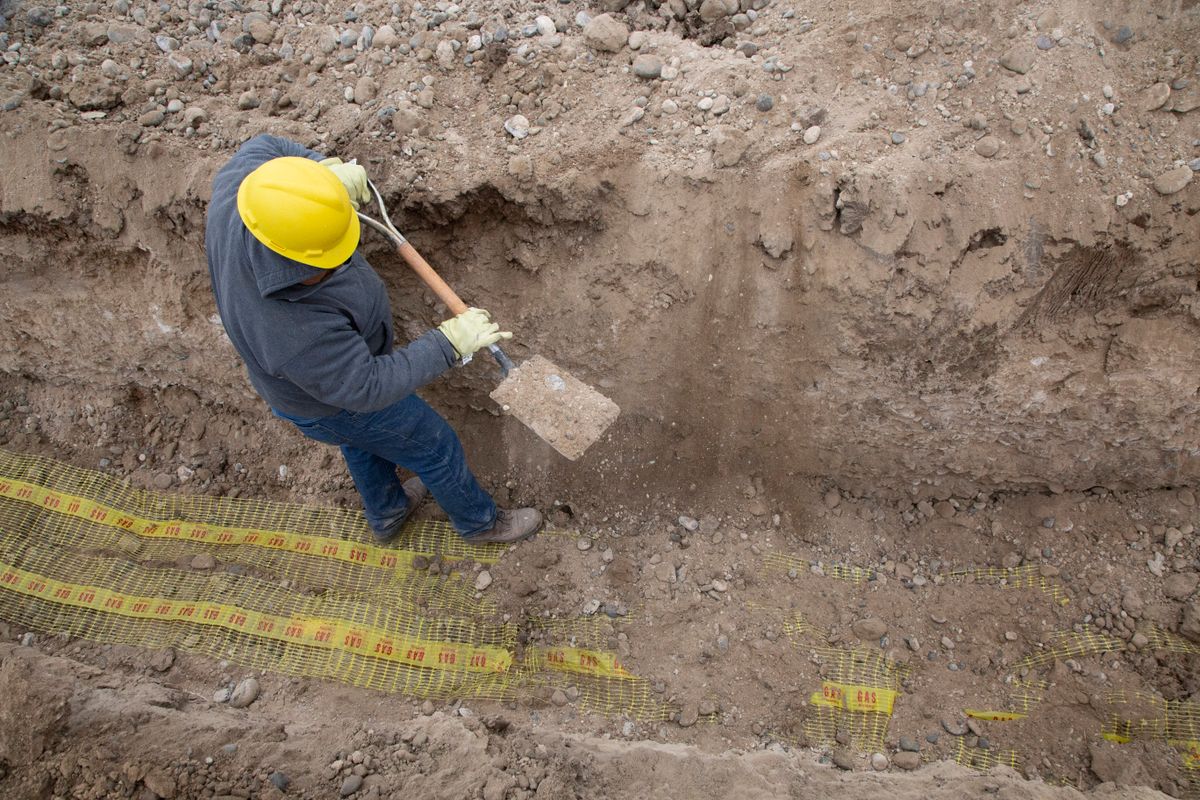
What people mean by trenchless
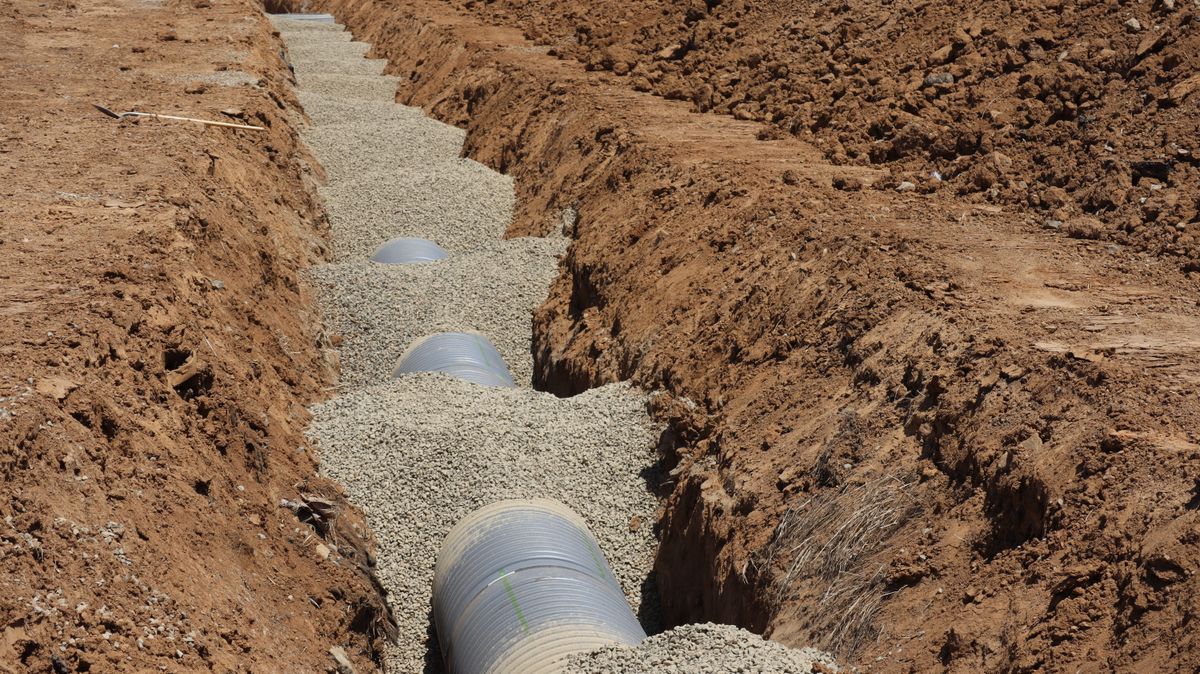
The name is slightly misleading. There is still digging. What disappears is the long open ditch between the street and the house.
In a trenchless job, the crew opens a small pit at each end of the line, usually near the meter side and near the foundation. The new pipe gets installed between those pits underground. The ground in the middle stays put, along with whatever sits on top of it.
It is a method, not a product. Nobody makes a trenchless pipe. What changes is how the pipe gets into position, and that changes what happens to your yard.
Two ways to get a pipe through the ground
Water service work generally uses one of two approaches. Each suits different conditions, and a good technician explains why they picked one.
Pipe bursting
The old line itself becomes the guide. A tool is pulled through the existing pipe, breaking it outward into the soil while drawing the new pipe in right behind. This works when the old route is where you want the new one, and when the old pipe is in reasonable alignment.
Directional boring
A small drilling rig bores a fresh path from one pit toward the other, then the new pipe is pulled back along that hole. This one does not depend on the old line, so it can take a different route altogether, around obstacles or to a better entry point at the house.
Which method fits is a field decision. Soil, depth, other buried utilities and the state of the old pipe all feed into it, so be skeptical of any promise made before someone has looked at the site.
Where it fits, and where it does not
Trenchless tends to make sense when the surface above the line is worth protecting or hard to restore. That usually means one or more of the following:
- a poured or paved driveway that crosses the route
- stone walks, steps or retaining walls
- mature trees whose roots you would rather not cut
- a steep or terraced yard where a trench is awkward
- finished landscaping that took years to establish
It is a poorer fit when the soil is full of buried rock or debris, when the old line has collapsed in places, when the route is so short that opening it is quicker, or when another utility runs too close for a bore to be safe. Sometimes the old pipe cannot be used as a guide, and a boring path is blocked as well. Then an open trench is simply the answer.
No one can honestly say trenchless is always possible, or that it always costs less. Equipment, pits and crew time carry their own costs, and you offset them against restoration you avoid. If you have already been told your line is failing, our overview of old and lead-era service lines explains the older materials often involved.
Curious whether your own lot would suit it? Describe the yard to the dispatcher and ask for a technician who works in your area.
Describe the problem — we'll dispatchThe access pits: how many and where
Most jobs use two, though the number depends on the route and the site. One goes near the meter or curb stop side, the other close to where the line enters the house. A long run with a bend or an obstacle in between may call for a third.
The pits are not tiny. They need room for people to work, for the equipment to connect to the pipe and for the new line to enter at a gentle angle. Think a patch of lawn lifted up and set aside, not a keyhole. Where the house end is indoors, the crew may also need to work inside, in a basement or crawlspace.
The technician will usually mark the pit locations before breaking ground, so you can say if something is in the way. Sprinkler heads, a decorative stone, a utility box: tell them early.
Before any of it, the line needs to be located and other utilities marked. If you are not sure the problem is in the water line at all, read about water line leak detection.
Hard surfaces, hillsides and big trees: the lots that ask for it
Hardscape is the plainest case. Cutting a slab or lifting pavers, then making them look right again, is expensive in effort and rarely invisible. A bore beneath it avoids the problem, as long as the soil allows.
Slopes bring a different worry. A trench on a hillside can disturb drainage and be unpleasant to restore, and equipment has to be set up on uneven ground. Boring along the slope or across it needs careful planning, but it can leave the surface calm.
Mature trees are the third group. Roots are part of the tree's structure. A trench through the root zone can hurt a tree you wanted to keep. Boring under the roots reduces that risk, though it cannot remove it completely, and an arborist is the right person to ask about a particular tree.
If the line has failed, water may be softening the ground above it. Stay clear of any sunken area and keep cars off it.
Trenchless in the parts of Dover that tend to need it
The old borough core is a good example of where the question comes up. Houses sit close to the street, driveways and sidewalks are tight and the ground has seen many repairs. Short runs and cramped space can go either way, so Dover Borough homeowners should expect the technician to weigh both methods.
Along Carlisle Road, Weigelstown subdivisions built across several decades tend to have established driveways, mature plantings and fenced backyards. These are the properties where protecting the surface counts for a lot, and our Weigelstown page describes what is typical there.
Further out, larger rural-edge lots in Davidsburg and Conewago Township have long lines across open ground. Here a trench through the grass may be simple and sensible. Homes on private wells are outside the scope of this service.
Winter matters too. Frost and thaw cycles stress the ground, and a bore needs workable, stable soil. Scheduling and conditions can steer the choice. Ask the technician how the season affects the plan.
Have a line to replace and a yard you want left alone? Talk it through by phone first.
Call now and get a plan today