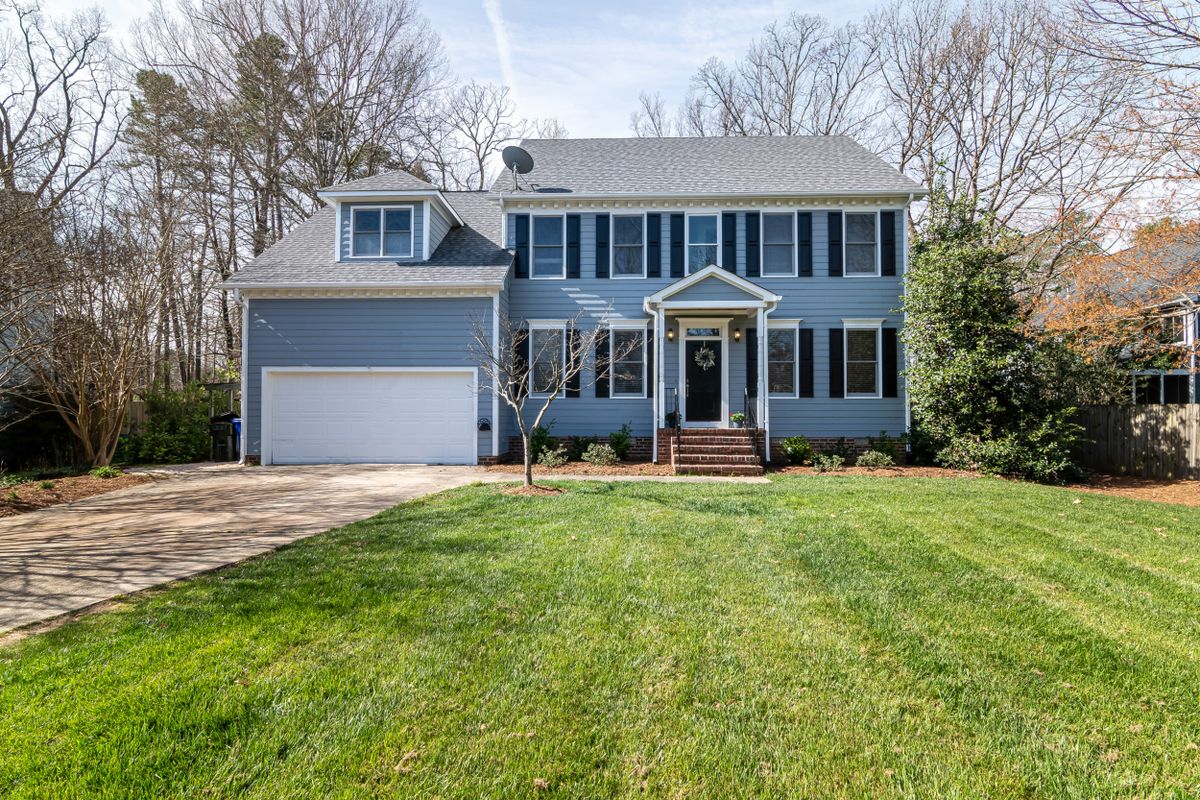
A long run, buried a long way from anyone watching it
Dover Township wraps around the borough on every side, and its homes do not look alike. Some stand in subdivisions with regular lots and a short, tidy line. Others sit well back from the road on larger parcels, where the water service line may cross a good length of lawn, field edge or driveway before it reaches the foundation. A leak on a short line shows itself fast. On a long one, water can seep out unnoticed for a while, and the clues are a soft patch far from the house, a meter that will not sit still, or a bill that jumps.
One boundary matters up front. This service is for homes connected to a public water service line. Many rural properties in the township draw from a private well, and well pumps, pressure tanks and well lines are outside what we do. If you are on a well, you will not be helped by us, and we would rather say so now than waste your call.
Quick way to tell which camp you are in
Look for a meter, usually in a small box or pit near the road, and a water bill from a provider. Those point to public water. A pressure tank in the basement or a wellhead cap in the yard points the other way. When unsure, check with your water provider before you phone anyone.
Subdivision lots, farmland edges and every era in between
Because the township surrounds the borough and runs out into open country, housing age is all over the map. Older farmhouses and early country homes sit near newer subdivisions, and in-between are decades of ranch houses, split-levels and two-stories. A newer subdivision often means plastic or copper service lines that are in decent shape, while older stock can still rely on pipe from an earlier era.
Layout matters just as much. A bigger lot usually means the line runs farther from the curb stop to the house, sometimes diagonally, and sometimes beneath a driveway that was poured after the pipe went in. Basements are common, so the line often arrives at a foundation wall near a mechanical area where the shut-off and meter sit. Slab or crawlspace homes bring the entry point somewhere less obvious, like a garage or utility closet.
Where long lines tend to go wrong
The extra length creates extra chances for trouble. A joint that was fine for years can weep after soil shifts. Roots from larger trees can lean on pipe. A driveway crossing puts the line under weight and, if it ever needs work, under asphalt or concrete. And on exposed lots, frost can reach farther into open soil than it does beside a heated foundation.
In practice, main water line repair is the first question when the failure is a single spot, and the real difficulty is finding it. That is where underground leak detection earns its place, since a pro can locate a break along a long run without opening the whole yard. If the shut-off itself is stuck or leaking, a different job entirely, see the page on curb stop and main shut-off valves.
Got a wet patch far from the house and no idea why? Tell a dispatcher what you are seeing.
Call before it gets worseWalking the line: the technician checks on larger lots
On a bigger property the technician usually asks questions before reaching for a shovel. When did the pressure change? Is there any wet or sunken ground? Where is the curb stop, and has anything been built over the likely route since the house went up?
Then comes the routine: find the shut-off, read the meter against a quiet house, and judge whether the loss is on your private line or on the provider side, which you would need to take up with them. If the route is unclear, the pro may trace the line or listen along it. Only after the likely location is narrowed down does anyone talk about digging, and the discussion includes the yard, the driveway crossing and how the surface gets put back.
Call to completion on a country-sized lot
You ring, describe the symptoms and say roughly how far the house sits from the road. We ask a few questions, including whether you are on public water, and then dispatch a local technician, same day or emergency where available. On arrival, the technician inspects and talks you through the findings and your options, with upfront pricing explained before work begins. If you proceed, the independent professional carries out the job, and the plan covers things like how equipment gets in and how larger lawn areas are dealt with afterwards.
Ready to have someone look at a long line? A quick call gets a technician started.
Check availability in DoverNext door on either side
Our coverage continues beyond this part of the township in both directions. For the compact streets at the center of everything, see the borough page. For the western edge of the township, with its newer homes and country lots, the Davidsburg page fits better. Each reads differently, because the housing and the lines do.
The township sits in ZIP 17315, shared with the places above.