
Is it one faucet or the whole house?
This is the first question worth answering, and you can answer it yourself in a few minutes. Walk through the house and open the cold side at every sink, tub and outside spigot. If only one fixture is weak, the problem is almost certainly at that fixture: a clogged aerator, a worn cartridge, a kinked supply hose. That is a small fix, and not what this page is about.
If every fixture is weak, especially the cold side, the cause is upstream of the branches. Something is restricting the water before it spreads through the house. That could be a partly closed valve, a failing pressure regulator, or a restricted service line under the yard. Those are the candidates a pro sorts through.
Weak pressure at every tap? Tell the dispatcher what you have noticed and get a technician headed your way.
Call for a same-day slotHow a service line squeezes the flow
Think of a garden hose with a kink or a clog. Water pressure at the source can be perfectly fine and you still get a trickle at the end, because the passage in the middle is too tight. A service line works the same way over a much longer distance.
Two situations produce this. One is a line that has narrowed from the inside. Older steel pipe develops rust and mineral build-up on its inner wall, and the usable opening shrinks year by year. The other is a line that was simply small for the house from the start, or a house whose demand grew with extra bathrooms, a bigger family or new appliances while the pipe stayed the same.
The tell-tale pattern
A restricted line usually shows its hand when demand goes up. Pressure seems acceptable with one tap open, then collapses when the dishwasher starts or someone showers while the laundry runs. A slow, steady decline over seasons is typical of a narrowing pipe. A sudden drop points somewhere else, which is covered further down.
If the brown tint in the water or an old gray pipe at the wall is part of your story too, read about older galvanized and lead-era service lines, because those symptoms often travel together.
What the technician rules out before blaming the pipe
A responsible pro does not walk in and recommend digging. Replacement is a big job, so the diagnosis comes first. The technician we dispatch will usually work through the cheaper and simpler suspects before pointing at the buried pipe.
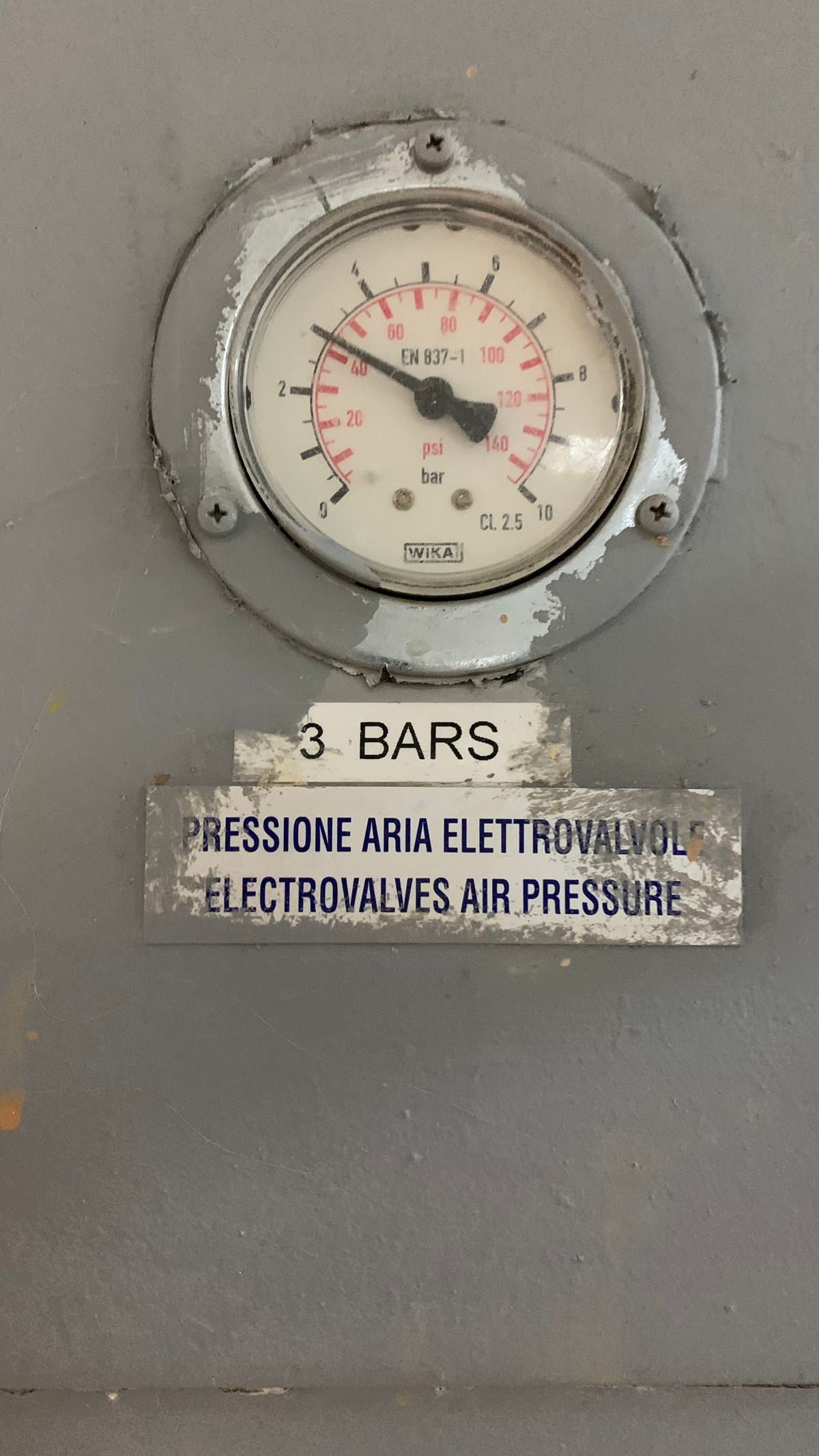
- The main shut-off inside the house. A gate valve that was never fully reopened after past work can quietly choke the supply. Valves also corrode internally and stop opening all the way.
- A pressure regulator. Some homes have a regulator near where the line enters. When it wears out, it can hold pressure too low.
- Fixtures and filters. Clogged screens or cartridges at the entry point can throttle flow.
- The provider side. If pressure is low for the whole street, or the meter and everything upstream of it is the cause, the fix belongs to your water provider and not to you.
Notice what is on that list: things that are quick to confirm. Ruling them out means that if the technician does come back to the buried line, you are hearing it from someone who checked the alternatives first. Our page on curb stops and shut-off valves explains the valve side of that checklist in more detail.
Wondering whether a pressure booster is the answer? Be cautious. A booster pushes harder on whatever is already there, and it does not clear a restricted pipe. Ask the technician whether it makes sense for your house before buying anything.
How the diagnosis actually goes
The usual order of events is practical. First comes a conversation: when the pressure changed, whether it dropped suddenly or crept down, whether hot and cold are both affected, and whether neighbors have the same complaint. Those answers narrow the field before anyone opens a toolbox.
Then comes measuring. A pressure gauge on an outside spigot or at the entry point shows what the house is actually receiving, both with water running and with it off. A big gap between the static reading and the flowing reading is the signature of a restricted line. If the number is low even with nothing running, the cause is probably upstream, possibly the provider side.
The technician may also look at the meter, check for leaks with the meter test, and inspect the visible pipe where it enters the house for corrosion or an unusual material. A hidden leak on the line can also reduce pressure, so underground leak detection sometimes becomes part of the same visit.
Low pressure around Dover, PA: five different situations
Where you live in the area changes what is likely. Housing age and lot layout drive the diagnosis more than anything else.
Borough core
The oldest homes near the square and Canal Street are the likeliest to have a narrowed steel line, and many have basements with an easy-to-find entry point. A worn-out original shut-off valve is common too. See our notes on Dover Borough.
Weigelstown and the Carlisle Road side
Mid-century and later subdivisions often have a mix of original pipe and replacements. Pressure complaints here tend to come with a family that has grown into the house, adding demand the original pipe was never sized for.
Davidsburg and western Dover Township
Newer homes and larger lots mean longer runs from the street. A long line gives any restriction more room to cause trouble, and the Davidsburg area has plenty of that layout. Remember that homes on private wells are outside what this service covers.
East toward Conewago Township, and hills in general
Elevation matters. A house sitting well above the street has to lift water against gravity, and a hillside lot can show lower pressure than a flat one even when everything is in good shape. A technician can tell the difference between normal elevation effects and a real restriction.
Winter
Cold winters and freeze-thaw cycles stress buried lines, and a pressure drop that starts in cold weather is worth mentioning when you call. It may be unrelated, or it may point at a damaged section.
When replacing the line is the real answer
After the simple causes are cleared, the technician may find that the line itself is the limit. That conclusion rests on evidence: low flowing pressure despite a good static reading, corroded pipe, a line that is too small for the house, or damage found along the run. In that case, no amount of adjustments at the fixtures will fix it.
Replacement of the private side is then the straightforward route, and the details of how that goes are on our main water line replacement page. Expect the technician to explain the options, the likely approach for your yard, and the pricing before any work begins. You decide whether to proceed.
No one can promise that a new line will cure every pressure complaint, because other factors outside the property can also play a part. But if the pipe was the bottleneck, getting it out of the way is what changes the outcome.
Pressure never recovers after the simple checks? Speak with a local main water line tech about next steps.
Speak with a local main water line tech